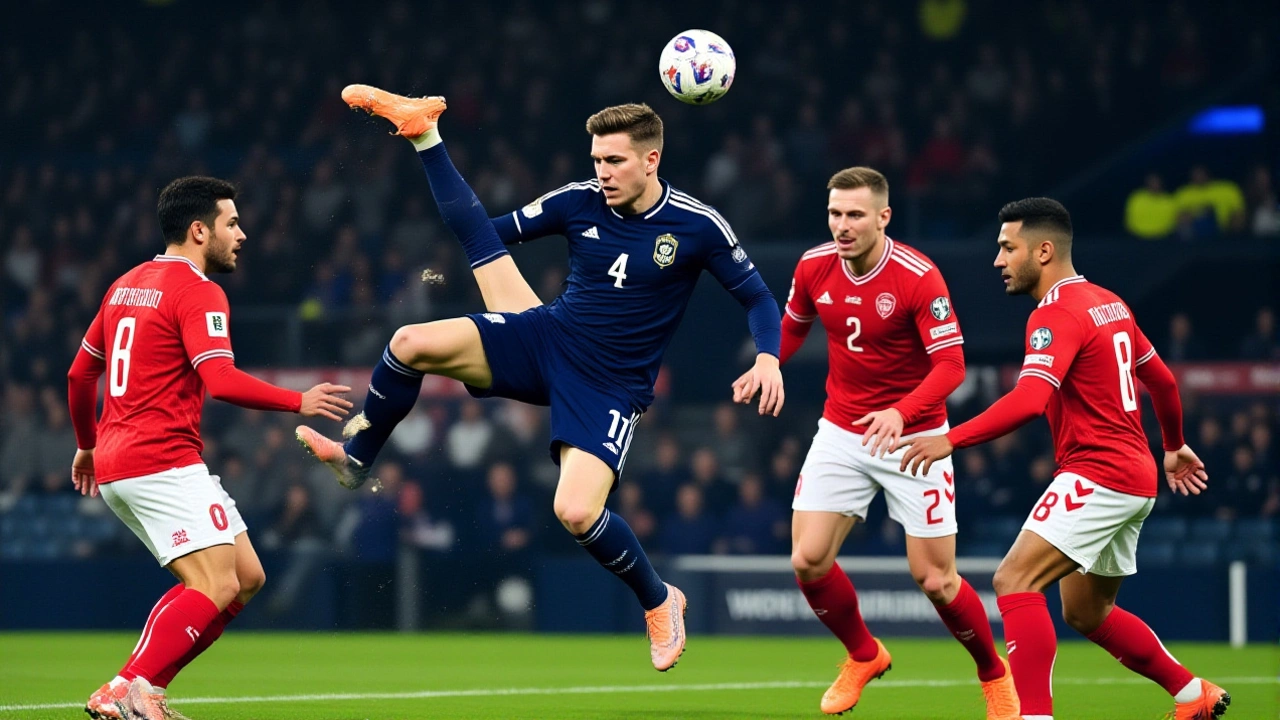
It wasn't just a goal. It was a moment that rewrote Scotland's modern football narrative. On June 8, 2022, at 7:45 PM BST, Scott McTominay launched himself into the air at Hampden Park — a 12-yard bicycle kick so pure, so audacious, it left even the most seasoned observers speechless. The ball arced over the Armenian defense and crashed into the net. Scotland led 2-0. The crowd of 11,859 erupted. And Steve Clarke, Scotland’s manager since 2019, turned to his staff and said, "That’s the best overhead kick I’ve ever seen in my life."
From Emergency Defender to National Icon
Just seven days before that bicycle kick, McTominay was playing out of position — not as the box-to-box midfielder he is for Manchester United, but as a last-resort centre-back. Injuries had decimated Scotland’s backline ahead of their UEFA World Cup Qualification Play-off semi-final against Ukraine on June 1, 2022. Clarke, needing someone tall, strong, and tactically intelligent, turned to the 6-foot-4-inch McTominay. He didn’t just hold his ground — he dominated. Scotland won 3-1 after extra time in front of nearly 28,000 fans.Then came the final. Against Serbia on June 5, 2022, McTominay returned to midfield. He controlled the tempo, broke up play, and helped Scotland hold firm through a tense 1-1 draw before winning 4-2 on penalties. For the first time since 2000, Scotland was going to the 2022 FIFA World Cup in Qatar. The nation held its breath. Then came the bicycle kick.
The Goal That Defined a Generation
The goal wasn’t luck. It was the product of years of physical conditioning, spatial awareness, and sheer nerve. McTominay, who had scored just six international goals in 37 prior appearances, timed his jump perfectly. His left foot struck the ball at its sweet spot, driving it downward with precision. The technique was textbook — but the confidence? That was pure McTominay."Most players wouldn’t even attempt that," Clarke said in his post-match press conference at Hampden Park. "It’s not just skill; it’s instinct developed through years of practice." The French referee, Francois Letexier, didn’t even need to consult VAR. The goal stood. The crowd didn’t stop chanting his name for the next ten minutes.
McTominay’s rise under Clarke is one of modern football’s most fascinating tactical transformations. At Manchester United, he’s a midfielder who covers ground like a linebacker. But Clarke saw something else: a player with the physical presence of a central defender and the technical flair of a playmaker. The switch wasn’t born out of preference — it was necessity. And yet, it unlocked something extraordinary.
What Happens Next? The Road to Qatar
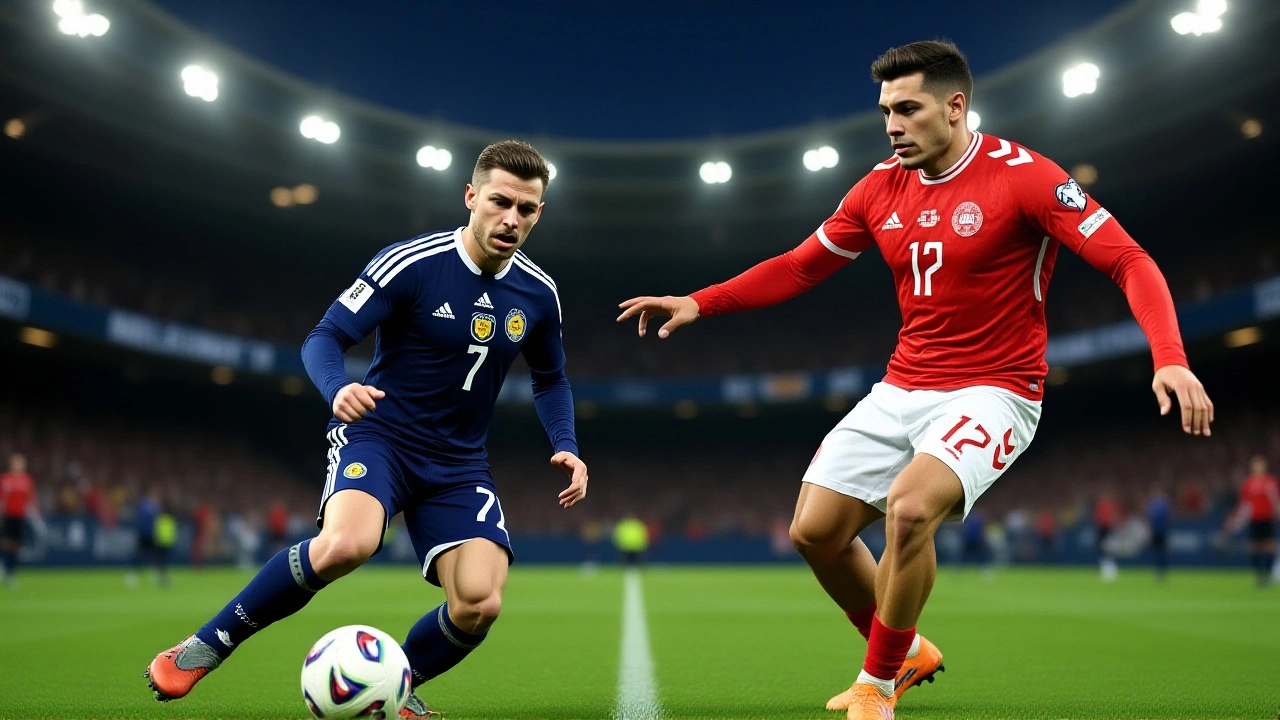
The Scottish Football Association wasted no time. On June 9, 2022, they announced McTominay would be central to Scotland’s final preparations. Friendlies against Croatia on June 12 at Hampden and Tunisia on June 16 at Stade de France were designed to fine-tune the squad before departure for Qatar on November 4, 2022.Scotland’s group — England, Iran, and United States — is brutal. But McTominay’s dual role as midfield enforcer and occasional goal threat gives Clarke options no other team in Group B has. He’s not just a player; he’s a tactical wildcard.
Manchester United boss Erik ten Hag acknowledged the significance. "Scott brings something unique to both clubs," ten Hag said during training at Carrington on June 10. "He’s got the engine of a machine and the courage of a lion. You don’t see that every day. He’s become indispensable."
Why This Matters Beyond the Pitch
Scotland’s return to the World Cup after 22 years wasn’t just a sporting triumph — it was emotional catharsis. Generations of fans had waited. The 2000s were a blur of near-misses and heartbreak. The 2018 World Cup? A cruel 3-1 loss to England in qualifying. This time, it wasn’t just about qualifying. It was about identity.McTominay, born in Oswestry, England, to a Scottish mother, chose to represent Scotland at age 21. He didn’t have to. But he did. And now, with his bicycle kick, he gave Scotland a symbol — a moment that will be replayed for decades. Not just because it was beautiful. But because it was earned.
Behind the Scenes: The Making of a Moment
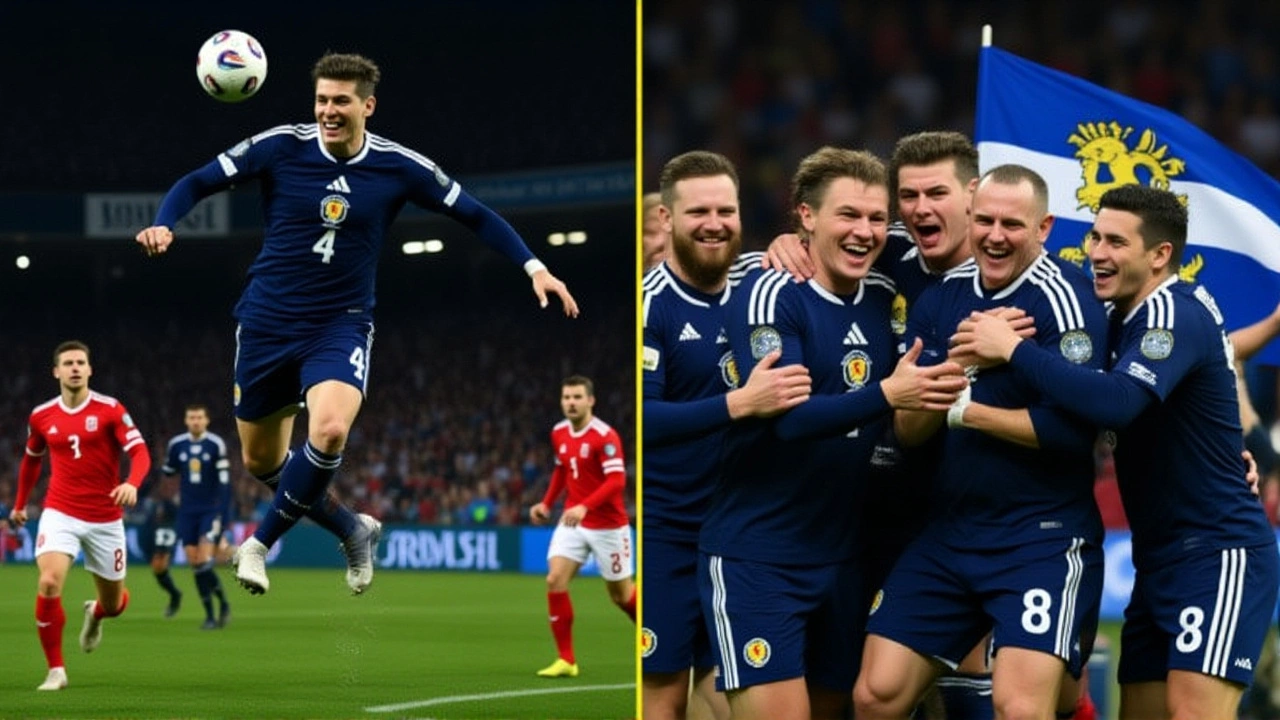
Clarke didn’t just stumble upon McTominay’s versatility. He cultivated it. During the 2020–21 UEFA Nations League, Clarke began experimenting with McTominay in deeper roles. The midfielder’s height (193 cm), aerial dominance, and reading of the game made him ideal. Over time, Clarke added technical drills — one-touch volleys, jump timing exercises, even aerial duels against goalkeepers in training."We didn’t train the bicycle kick," Clarke admitted later. "We trained the confidence to try it. Scott’s always been the guy who’ll go for the impossible. We just gave him space to believe it."
That’s the quiet genius of Clarke’s management: turning necessity into innovation. McTominay’s goal wasn’t a fluke. It was the culmination of months of deliberate, unglamorous work.
Frequently Asked Questions
How did Scott McTominay go from midfield to centre-back in such a short time?
Steve Clarke shifted McTominay to centre-back during Scotland’s World Cup qualifiers due to injuries in the defensive line. McTominay’s height (193 cm), physical strength, and tactical intelligence made him an ideal stopgap. He didn’t just adapt — he thrived, helping Scotland win both playoff matches. Clarke later said the move revealed McTominay’s versatility, which eventually enhanced his midfield role too.
Why is McTominay’s bicycle kick considered so rare in international football?
Bicycle kicks are high-risk, low-percentage moves — especially under pressure in competitive matches. McTominay’s goal was one of only five such goals scored in World Cup qualifiers since 2000. What made it extraordinary was the timing (70th minute), the distance (12 yards), and the fact it came in a must-win game. No Scottish player had ever scored one in a competitive international before.
What impact does McTominay’s role have on Scotland’s World Cup chances?
McTominay’s dual ability to shield the defense and launch attacks gives Scotland a unique advantage in Group B. Against physical teams like England and Iran, his aerial presence is vital. His goal-scoring threat from midfield also forces opponents to adjust their tactics — something Scotland hasn’t had since the 1990s. He’s the team’s most unpredictable weapon.
Did Manchester United support McTominay’s national team role?
Yes. Manager Erik ten Hag publicly praised McTominay’s commitment and physical conditioning, noting his improved stamina and defensive discipline. United’s staff even adjusted his pre-season schedule in 2022 to accommodate Scotland’s World Cup preparations, recognizing his value to both club and country. His performance in Qatar could influence his long-term future at Old Trafford.
What’s the historical significance of Scotland’s 2022 World Cup qualification?
Scotland’s last World Cup appearance was in 1998. Their 22-year absence was the longest among any former European champion. Qualifying in 2022 ended a generation of near-misses — including heartbreaking losses to England in 2018 and Croatia in 2016. This time, they qualified through the playoffs after finishing second in their group, making it all the more meaningful for fans who grew up without seeing their team on football’s biggest stage.
Where will McTominay play in Scotland’s World Cup matches?
McTominay is expected to start as a central midfielder in a 4-2-3-1 or 4-3-3 formation, tasked with breaking up play and linking defense to attack. Clarke may occasionally shift him into a deeper role against stronger opponents, but his goal threat from midfield — proven against Armenia — will be a key tactical weapon. He’s likely to wear the number 17 shirt in Qatar.



Write a comment